Getting to Ghent from Brussels

Ghent sits about 55 km northwest of Brussels, making it the perfect spot for a day trip. With transport options including trains, buses, coaches, a drive by car or taxi, and of course guided tours, there are plenty of ways to get there comfortably and without hassle. Each option has its perks, so here’s a quick look at what works best for you.

Where is Ghent located?

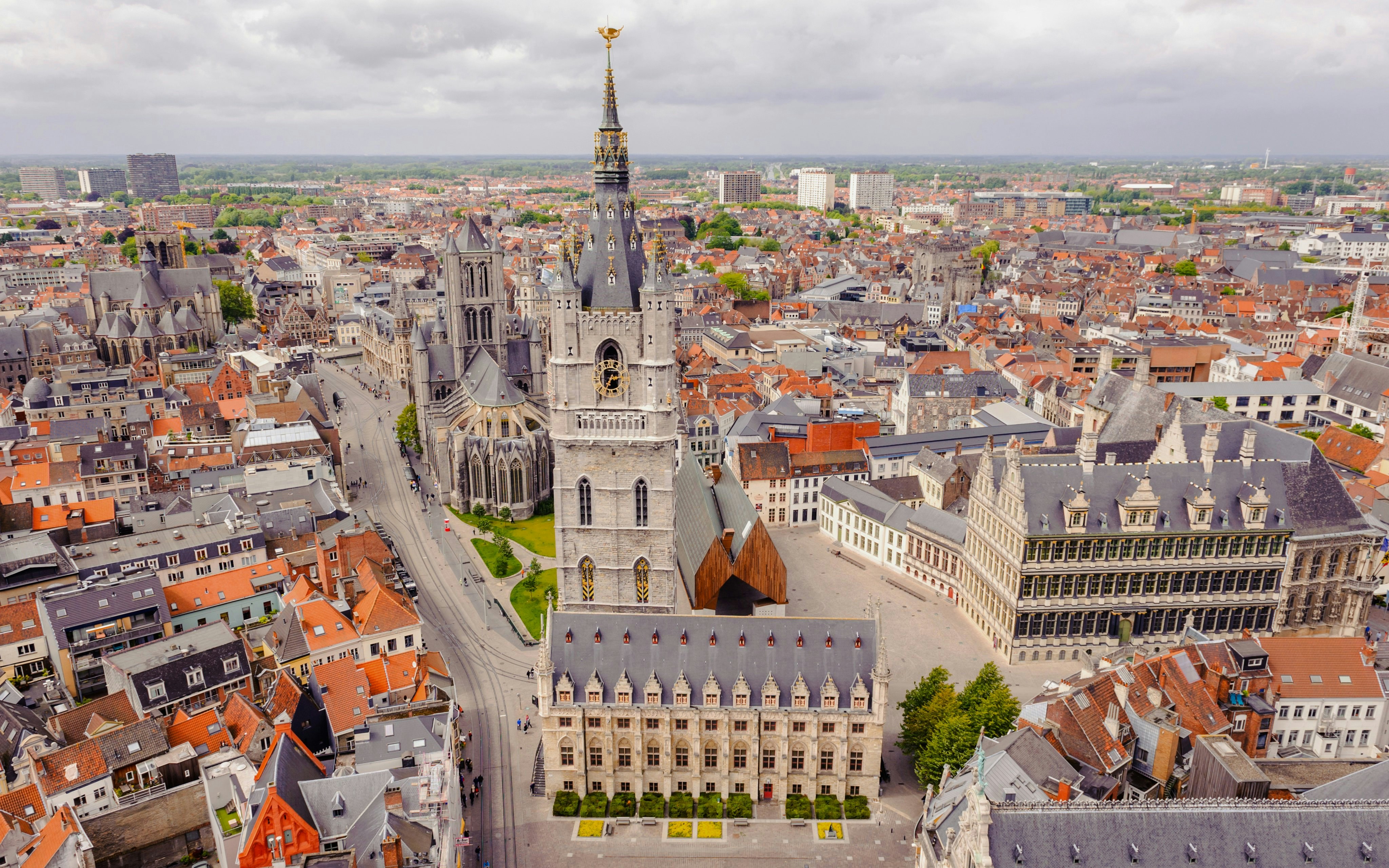
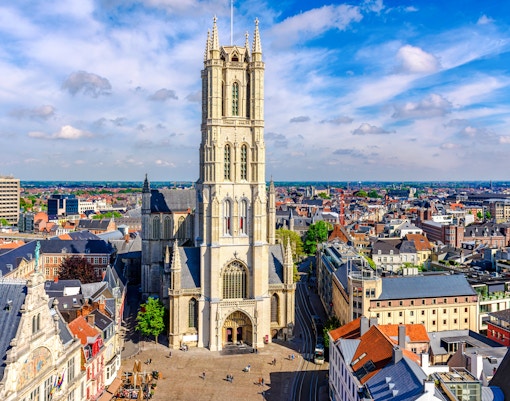
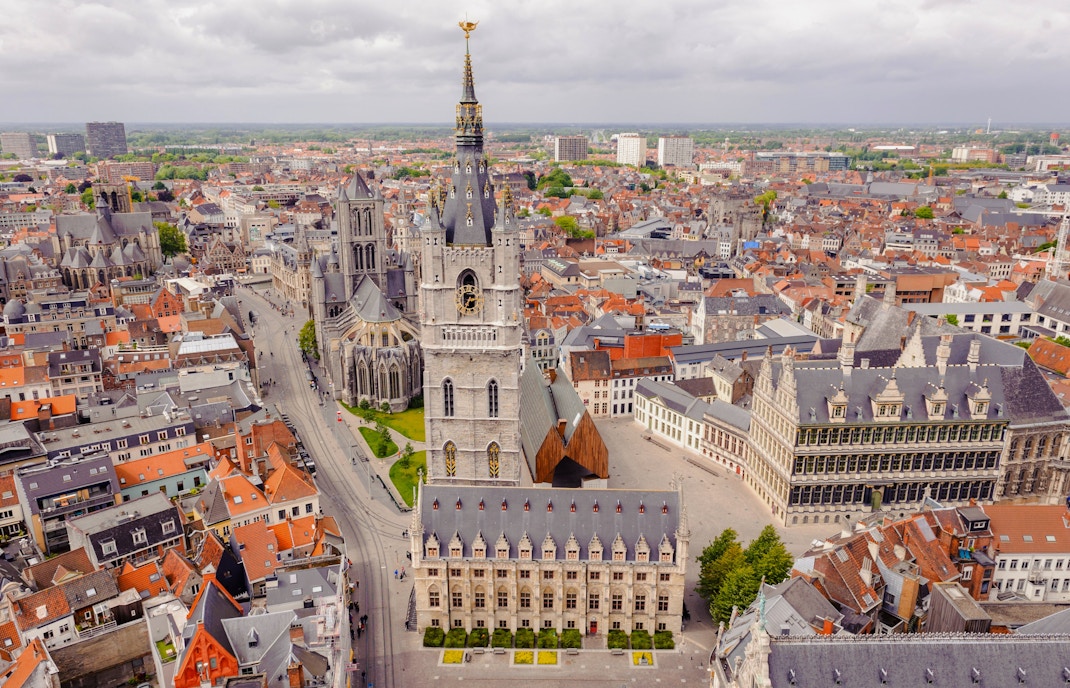
Aerial view of Ghent city center with Belfry of Ghent and St. Bavo's Cathedral, Belgium.

Address: Ghent, 9000 Gent, East Flanders, Belgium | Find on map

  • Distance from Brussels: 55–60 km northwest
  • Time taken from Brussels: Around 30–40 minutes by train or 45–60 minutes by car/bus

Access:

  • Train: Frequent direct trains from Brussels, about 30–40 minutes
  • Bus: Regular buses take around 60 minutes
  • Car/Taxi: Easy drive via the A10 / E40 motorway

Brussels to Ghent: Time & Distance

Passenger using phone inside a tour bus.

From Brussels: 55 km (34 mi) northwest of Ghent

  • By Train: 30–40 min direct (station to station)
  • By Bus: 50–60 min (limited services)
  • By Car: 45–65 min (no stops, via E40 motorway)
  • By Tour (round trip): 6–10 hr including sightseeing
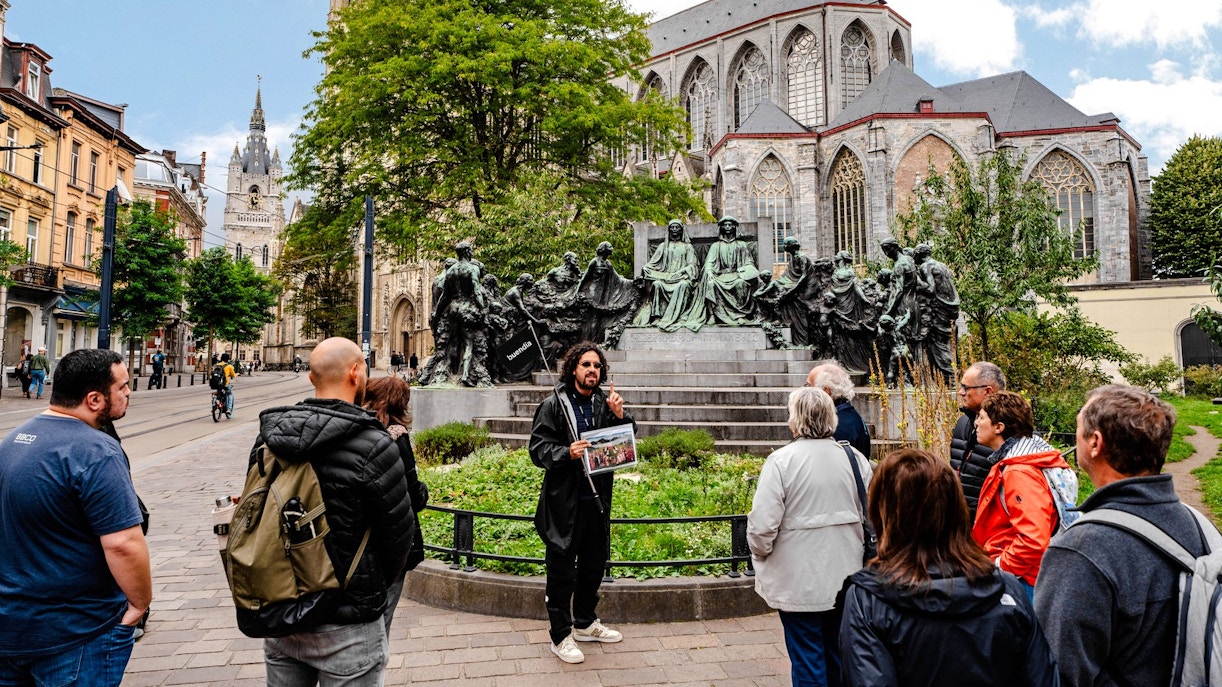
Tour group listening to a guide near a historic monument in Ghent city center, Belgium.

Taking a day trip to Ghent on your own can be tricky if you want to make the most of your time. Tours solve these pain points and make the experience smooth and enjoyable:

  • Skip the hassle of planning transport: Tours provide comfortable round-trip transfers by bus with all logistics handled, so you don’t have to worry about schedules or traffic.
  • See more in a day: Tours come with a planned itinerary that covers highlights like Saint Bavo’s Cathedral, the medieval city center, and the Graslei. You don’t have to stress about what to see because everything is organized for you.
  • Expert local insight: The best part of guided tours is the expert guides, who share history, legends, and hidden gems you might otherwise miss.
  • Stress-free scheduling: Tours plan the day efficiently so you get the most out of Ghent, even on busy weekends or holidays. Routes are organized to avoid traffic and minimize waiting, making your visit seamless.

By train

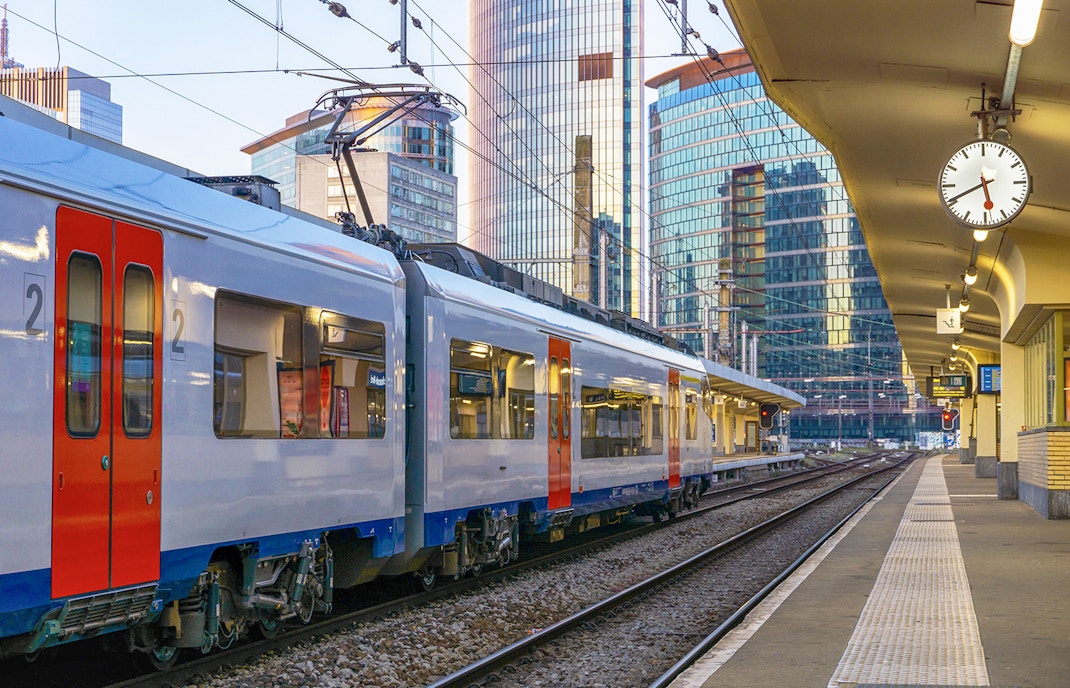
Train at Brussels Noord Railway Station platform, heading to Ghent, Belgium.

Origin & destination stations: Brussels‑Midi / Bruxelles‑Zuid, Brussels‑Central / Bruxelles‑Nord → Ghent‑Sint‑Pieters.

  • Duration: Around 35–40 minutes.
  • Frequency: Every 15–20 minutes throughout the day.
  • Ticketing tips: Buy at station machines or counters, via the SNCB/NMBS app, or online. Go Pass 10 is cost-effective for travelers under 26.
  • Last mile: Tram line 1 to Korenmarkt or a 25–30 minute walk into the city center.
  • Best for: Budget-friendly independent travel, flexible return times.
  • Cons: Can be crowded during peak commuter hours. Local transport or walking is needed to reach the central sights.

By bus

Man reading a book on a bus while listening to earphones.

Intercity buses operate between Brussels and Ghent with varying stops depending on the provider.

  • Duration: About 1 hour under normal traffic conditions.
  • Frequency: Limited departures per day.
  • Ticketing tips: Tickets can be purchased at terminals or via provider apps.
  • Best for: Budget travelers who are flexible with departure times.
  • Cons: Fewer departures than trains. Slower and affected by traffic.

By car

Man driving a car on a city street.

Take the E40 motorway northwest from Brussels to Ghent.
  • Approximate drive time: About 45–60 minutes without stops, depending on traffic.
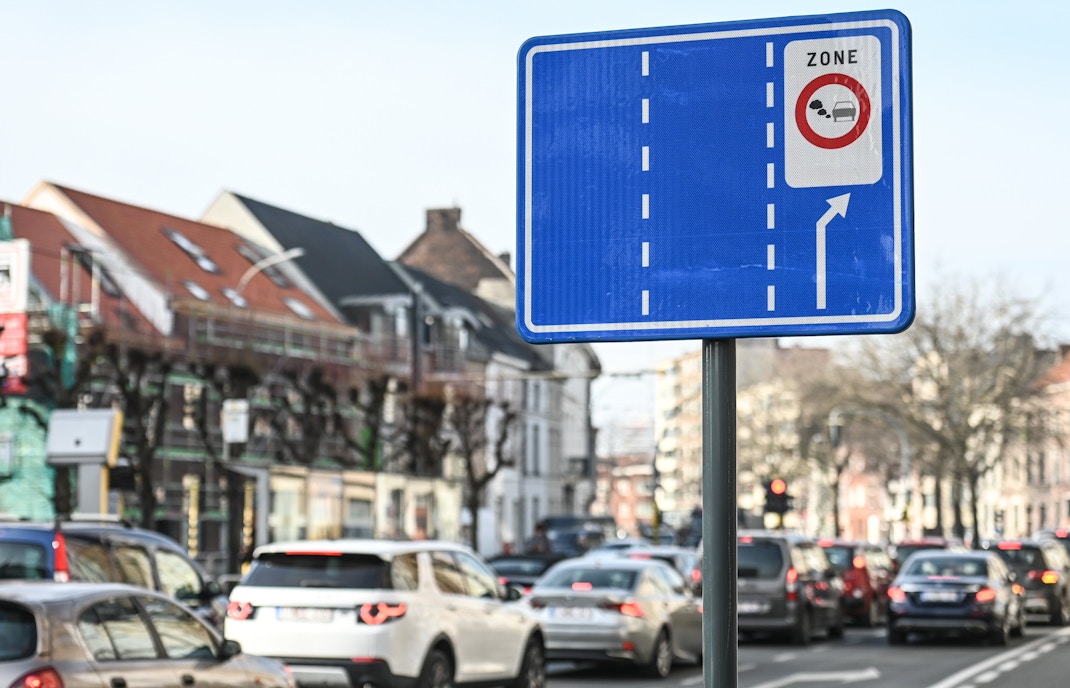
  • Parking reality: Central Ghent has restrictions and a low-emission zone. On-street parking is limited, and garages are expensive.
  • Seasonal traffic: Weekends and holidays can have heavier traffic on the E40.
  • Best for: Groups or travelers with flexible plans who want to combine stops outside Ghent.
  • Cons: Traffic approaching the city center can be slow. Must account for fuel and parking fees. Limited parking in central Ghent.

Compare your options

ModeDurationCost (approx)Best forKey Notes

Guided Tour

6–10 hr

€50 – €100

First‑timers, stress‑free

Includes round‑trip bus transfers and planned sightseeing.

Train

35–40 min

€10 – €18

Budget DIY, independent travelers

Frequent direct trains run between Brussels and Ghent. Take a tram or walk from the station into the city.

Bus

60 min

€5 – €12

Lowest cost travelers

Limited departures and usually slower than the train. Note that traffic can affect timing.

Car / Self‑Drive

45–60 min

€25 – €50+

Groups, flexible plans

Fuel, parking, plus potential low‑emission zone registration required.

Getting around in Ghent

Getting around Ghent is pretty easy once you know the city’s rhythm. Here are some tips to help you move smoothly and make the most of your day.

Walking

Ghent’s historic center is compact and very walkable. Most major sights like Gravensteen Castle, Saint Bavo’s Cathedral, and the Graslei are within a short stroll of each other. Expect 10–20 minutes on foot between key spots and wear comfortable shoes.

Trams and buses

The city has a reliable tram and bus network run by De Lijn. Trams are especially handy if you arrive at Gent‑Sint‑Pieters station and want to reach the city center quickly. A single tram ride is often faster than walking if your legs are tired.

Bikes

Cycling is a major way locals get around. There are plenty of bike lanes and rental options, including shared bikes. Bikes are faster than walking and let you explore canalside streets and quieter neighborhoods easily.

Taxis and ride-hail

Taxis and services like Uber are available but less common for short trips. They are useful if you have mobility needs or are heading somewhere outside the main center late at night.

Car

Driving inside Ghent is usually more trouble than it’s worth. The city center has a low-emission zone, narrow streets, and limited parking. If you come by car, park at a Park and Ride on the outskirts and take a tram or walk into the heart of town.

Things to do in Ghent

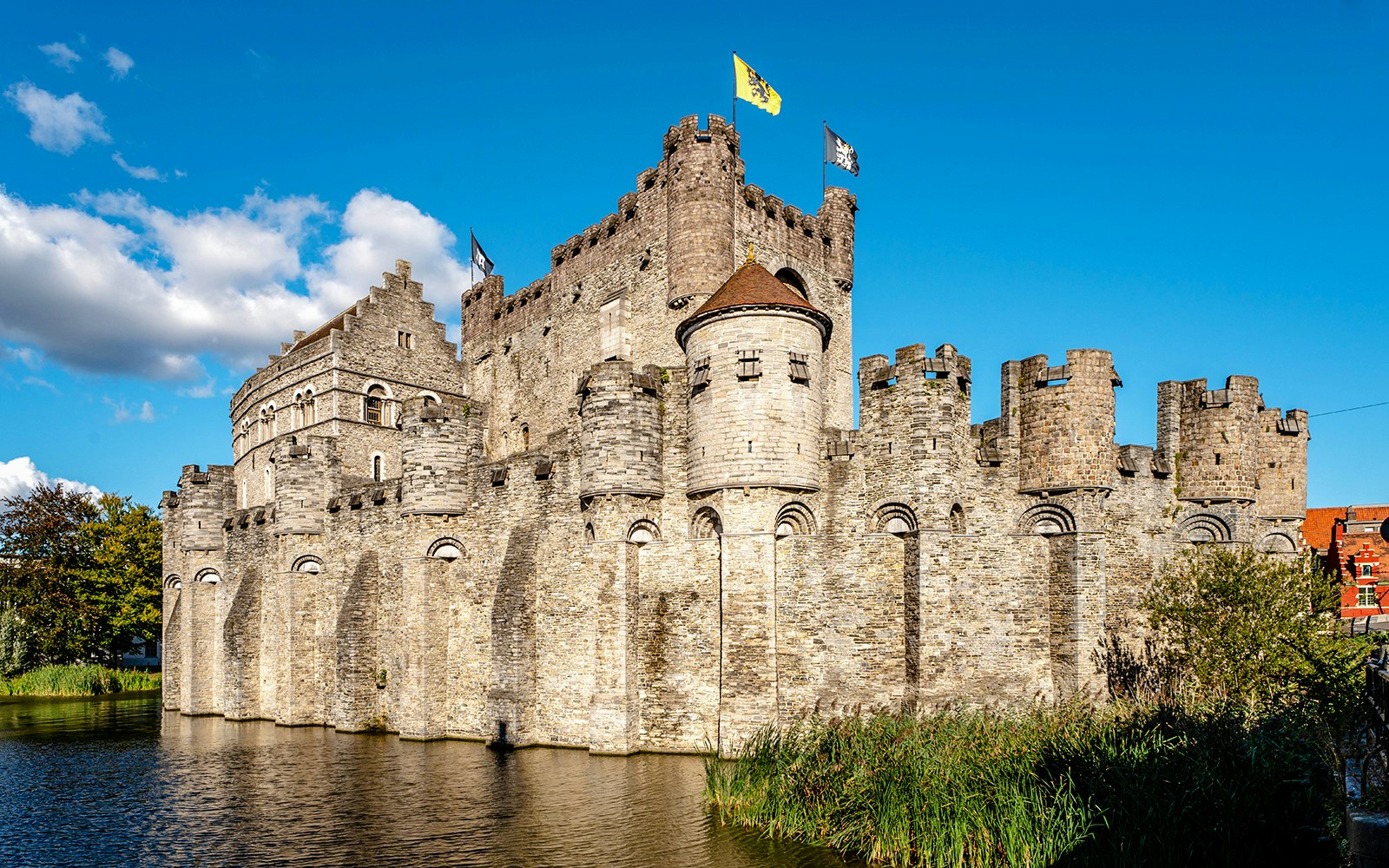
Gravensteen Castle with flags, surrounded by a moat in Ghent, Belgium.
Aerial view of Ghent city center with Belfry of Ghent and St. Bavo's Cathedral, Belgium.
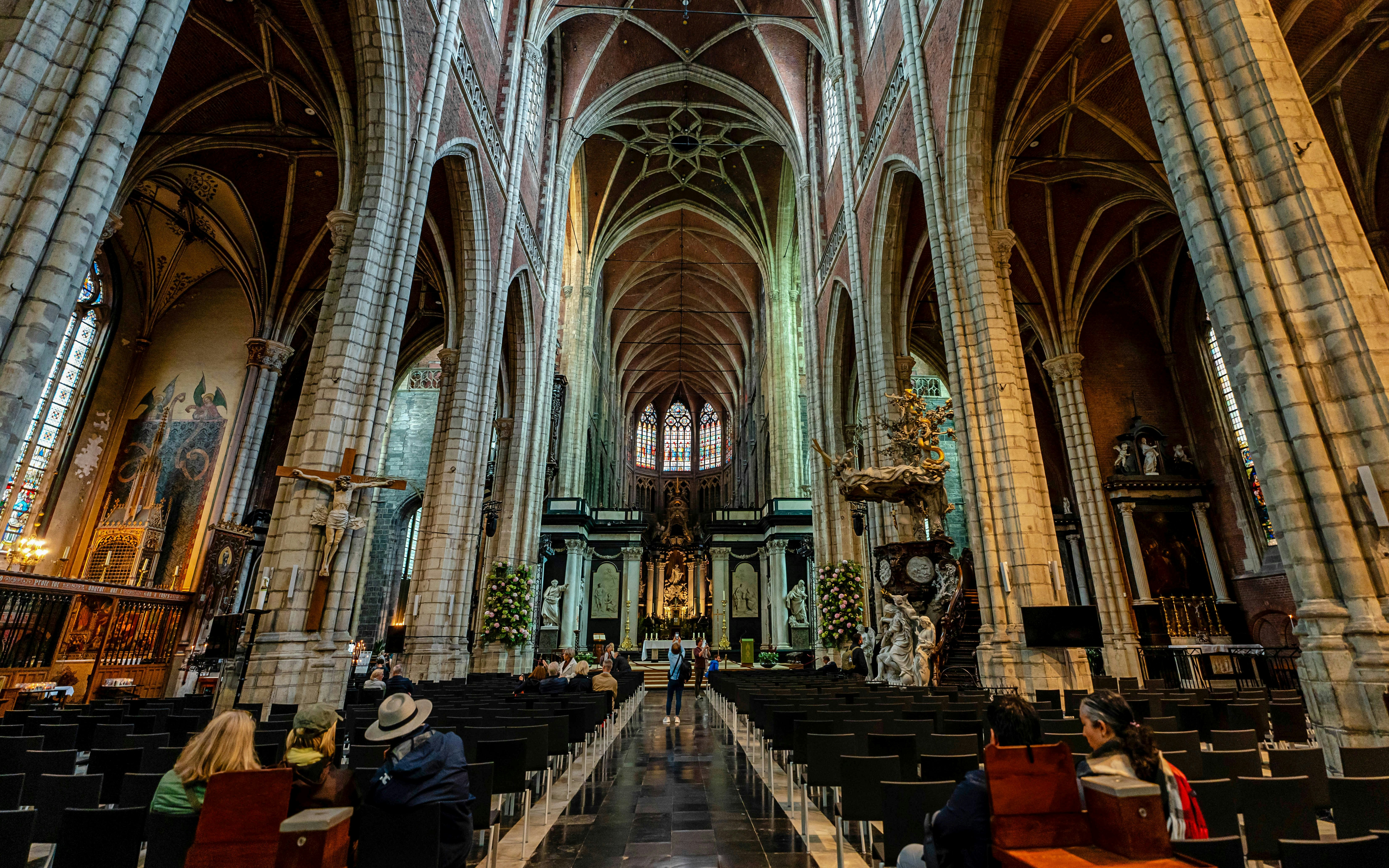
Interior view of Saint Bavo's Cathedral in Ghent, Belgium, showcasing its vaulted ceilings and ornate altar.
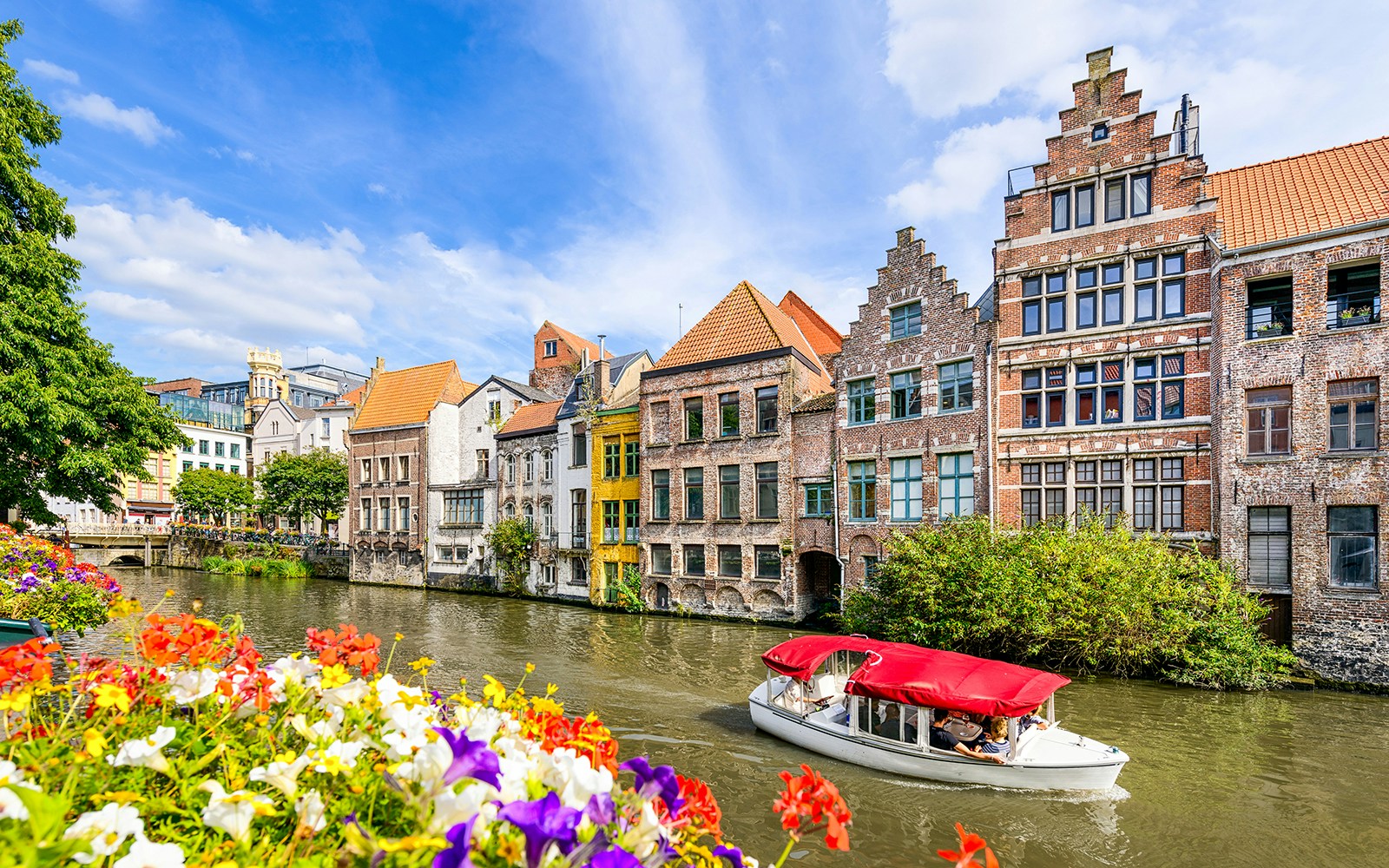
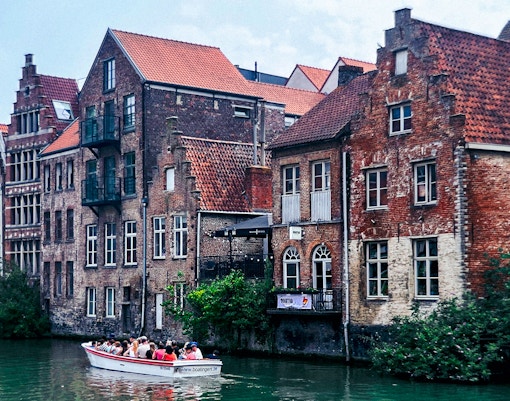
Canal boat passing historic buildings in the old town of Ghent, Belgium.
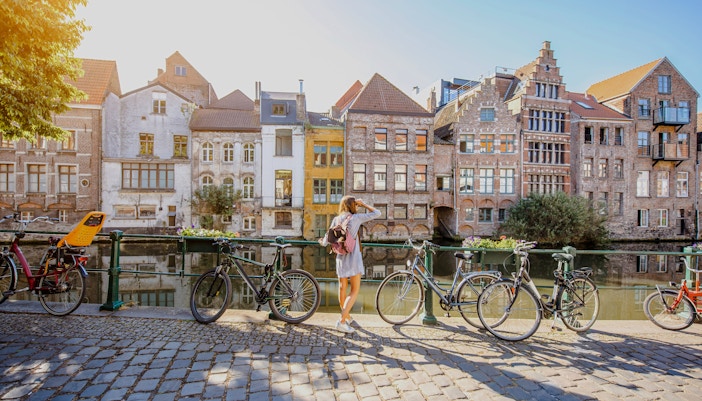
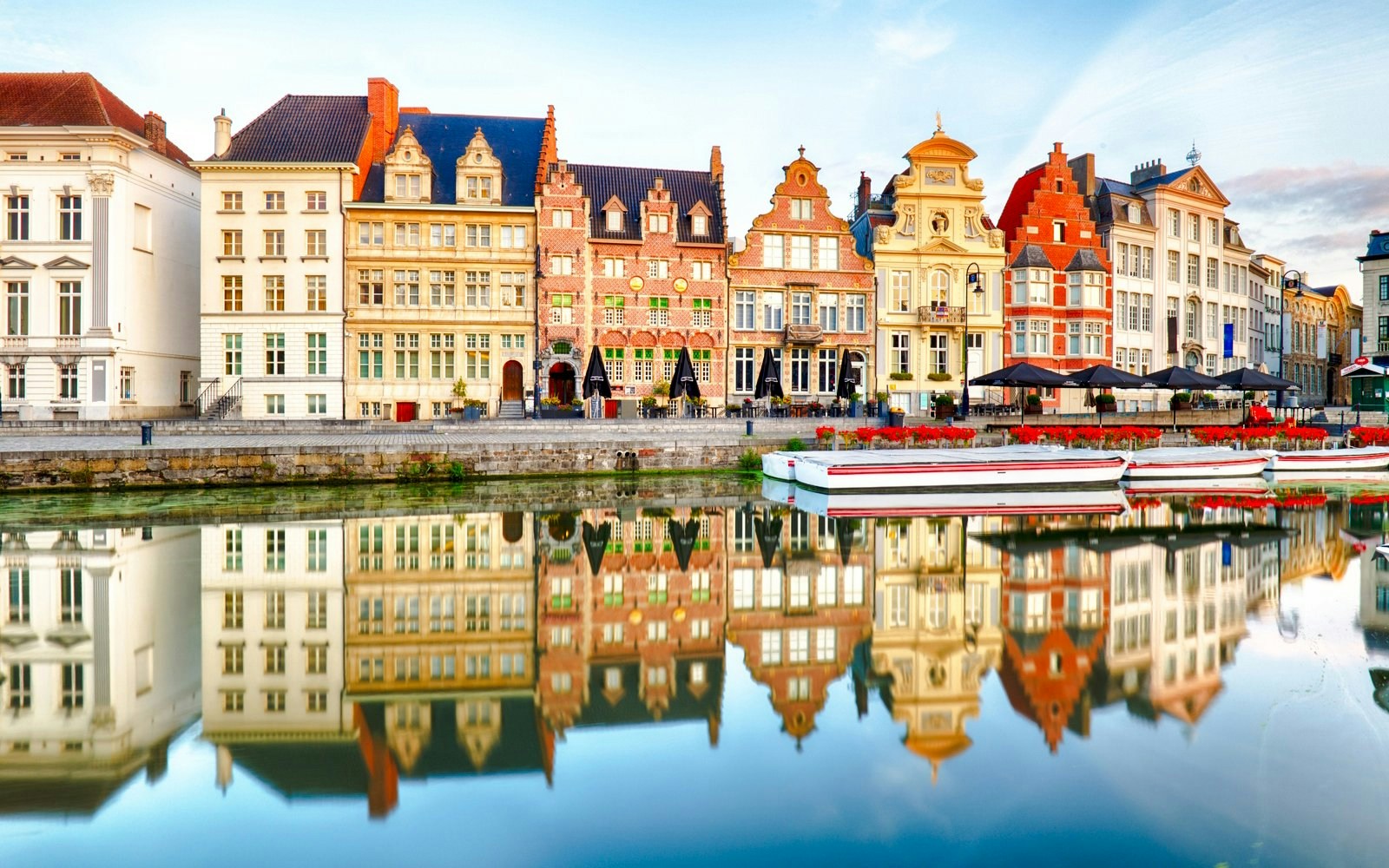
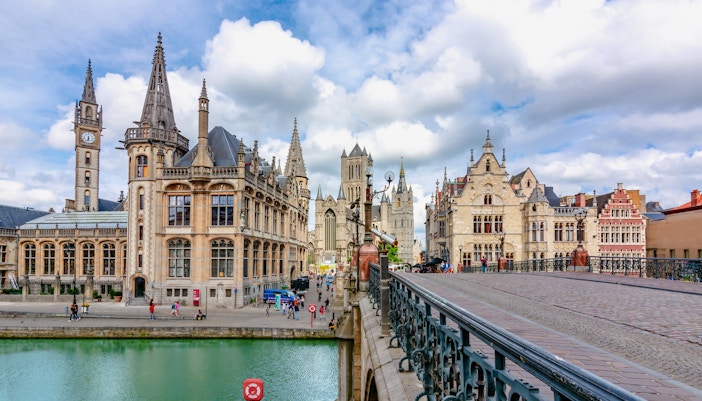
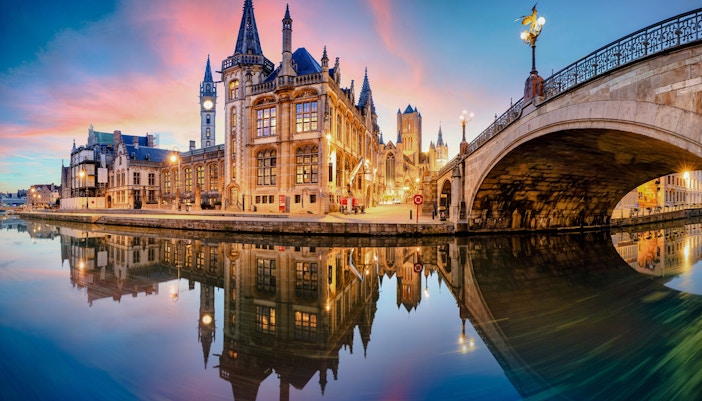
Graslei and Korenlei quays along the Leie river in Ghent, Belgium, with historic buildings reflected in the water.
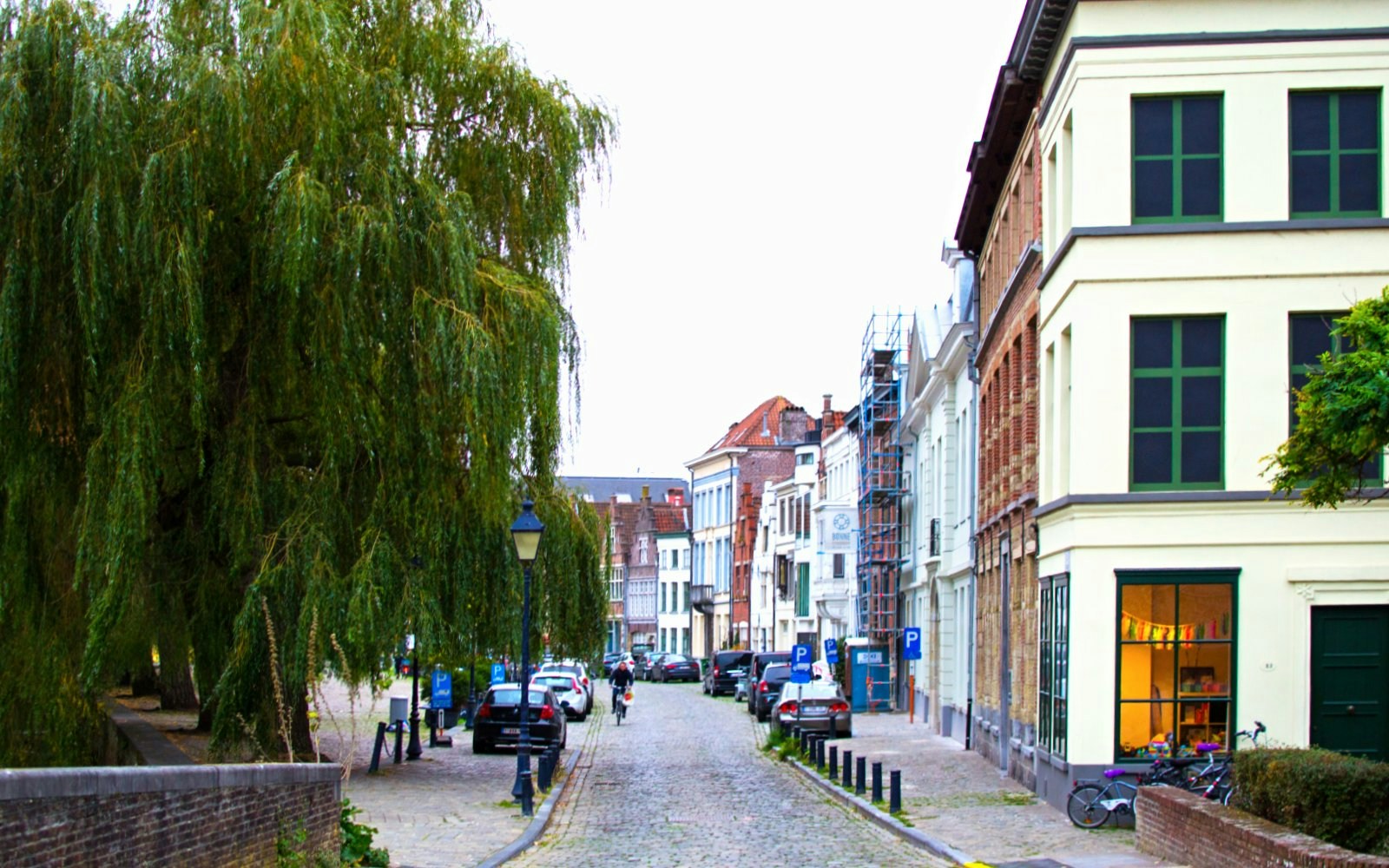
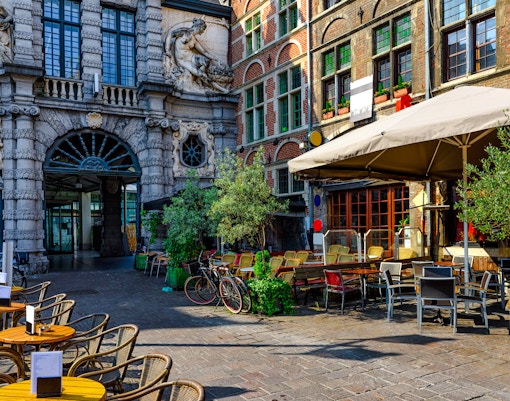
Cobbled street in Patershol, Belgium, lined with historic houses and trees.
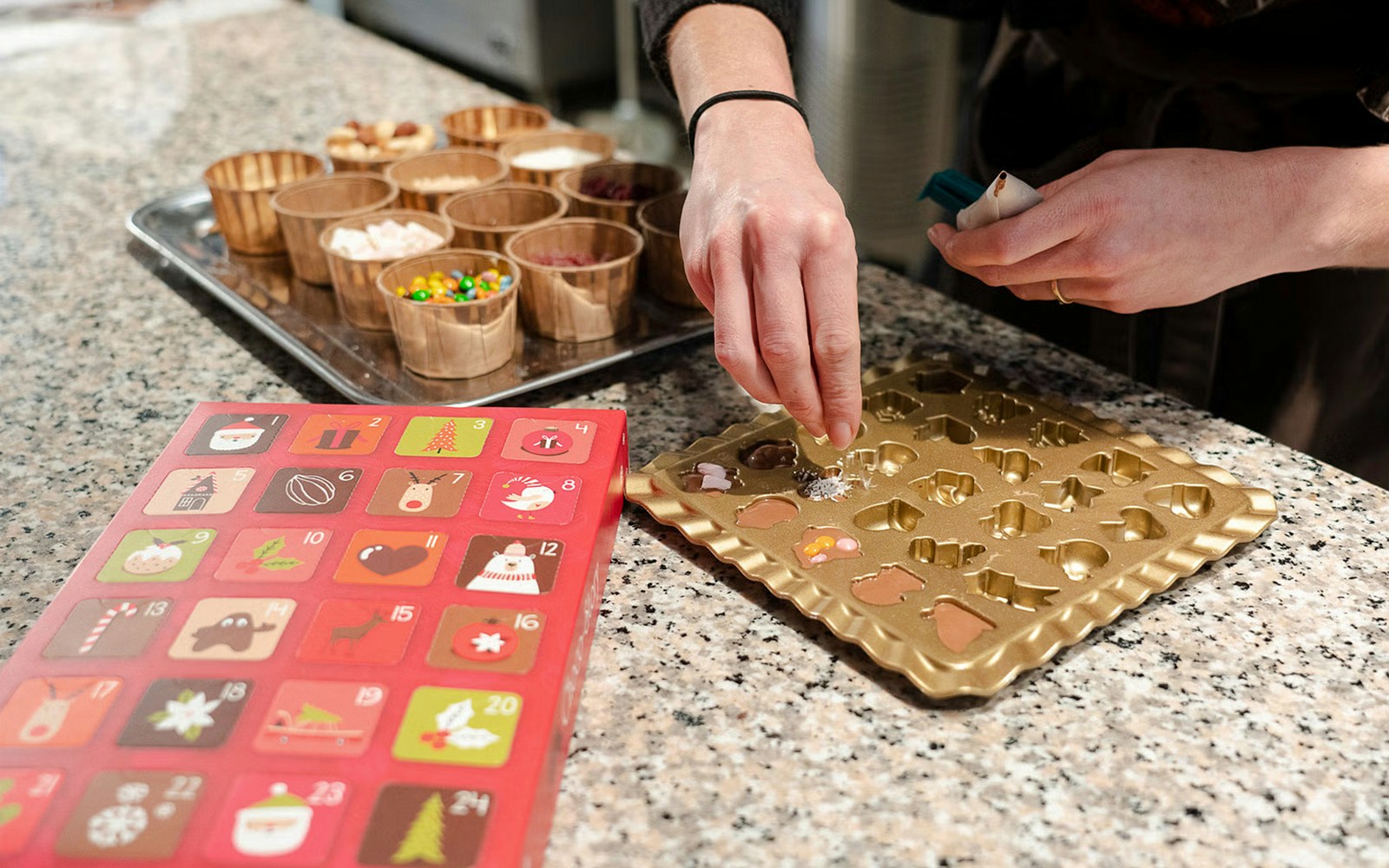
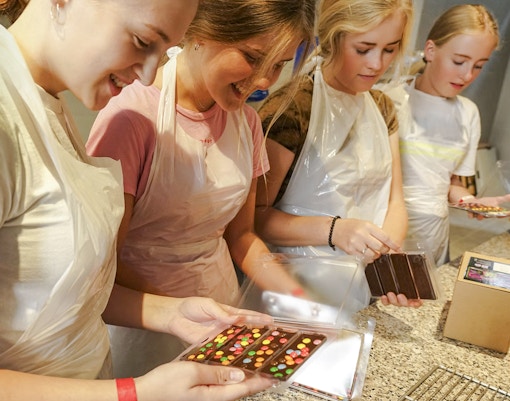
Creating chocolates at Choco-Story Brussels Museum with molds and toppings.
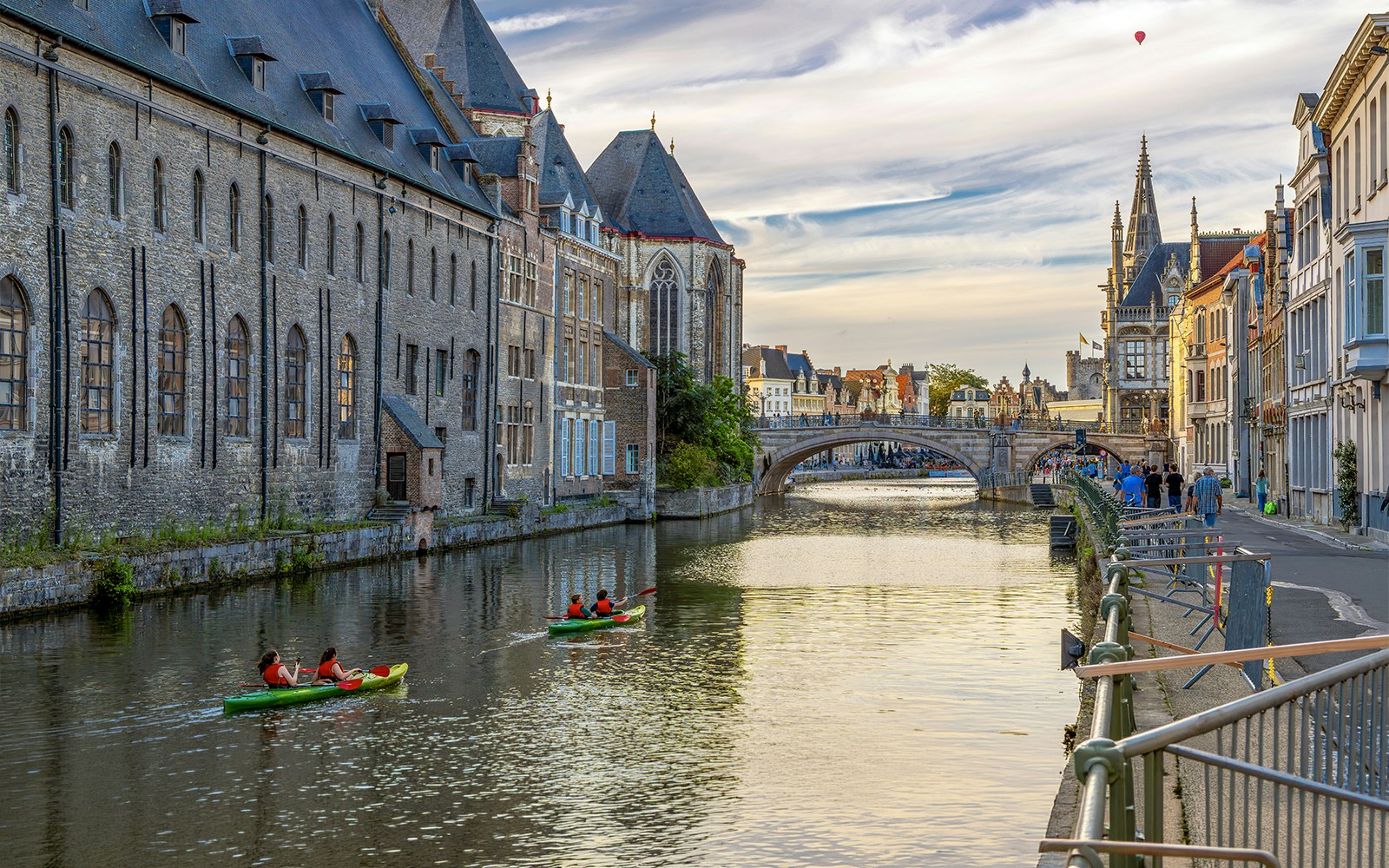
Kayakers on the Leie River in medieval Ghent, Belgium, at twilight.
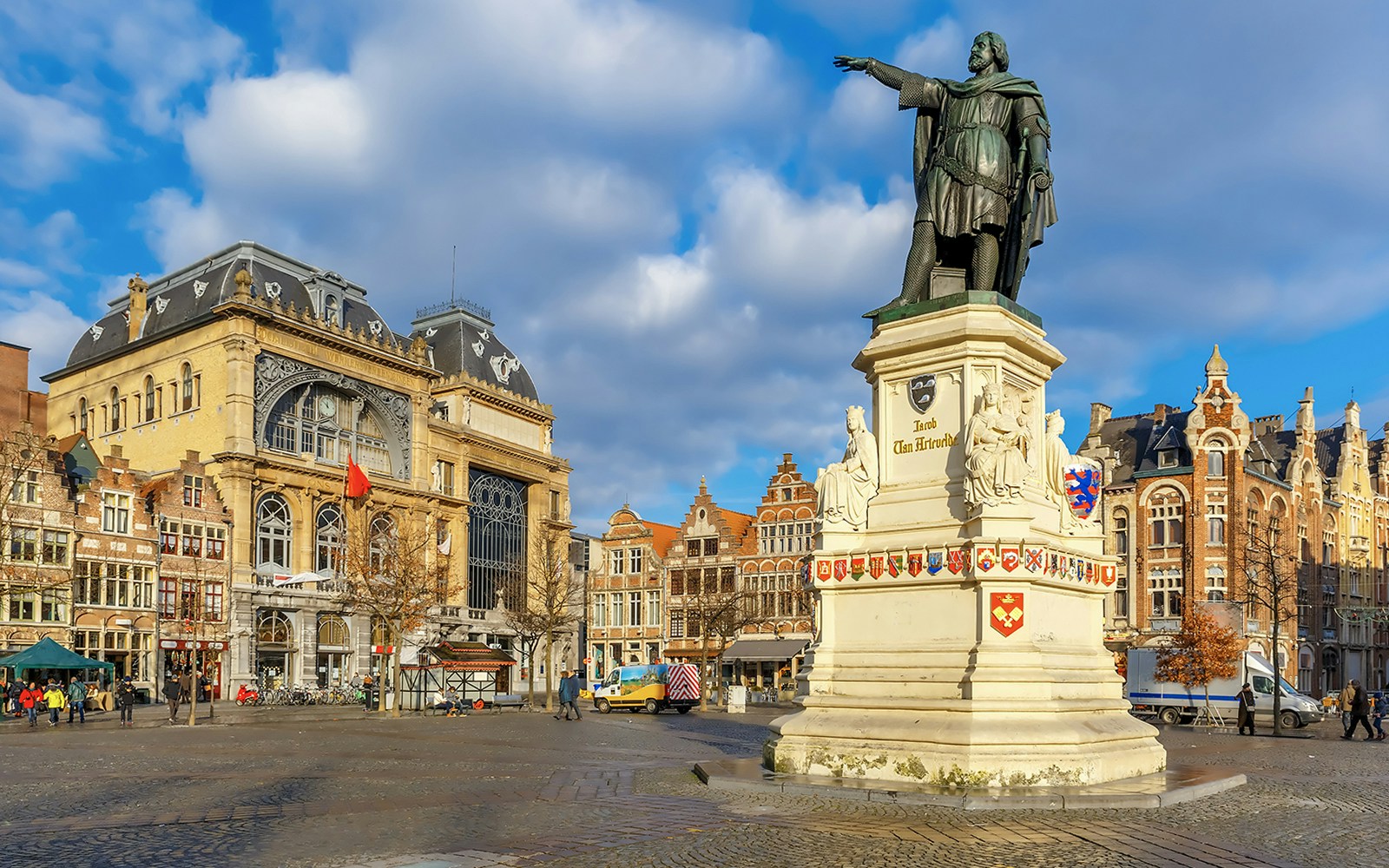
Jacob van Artevelde statue at Friday Market square, Ghent, Belgium, on a sunny morning.
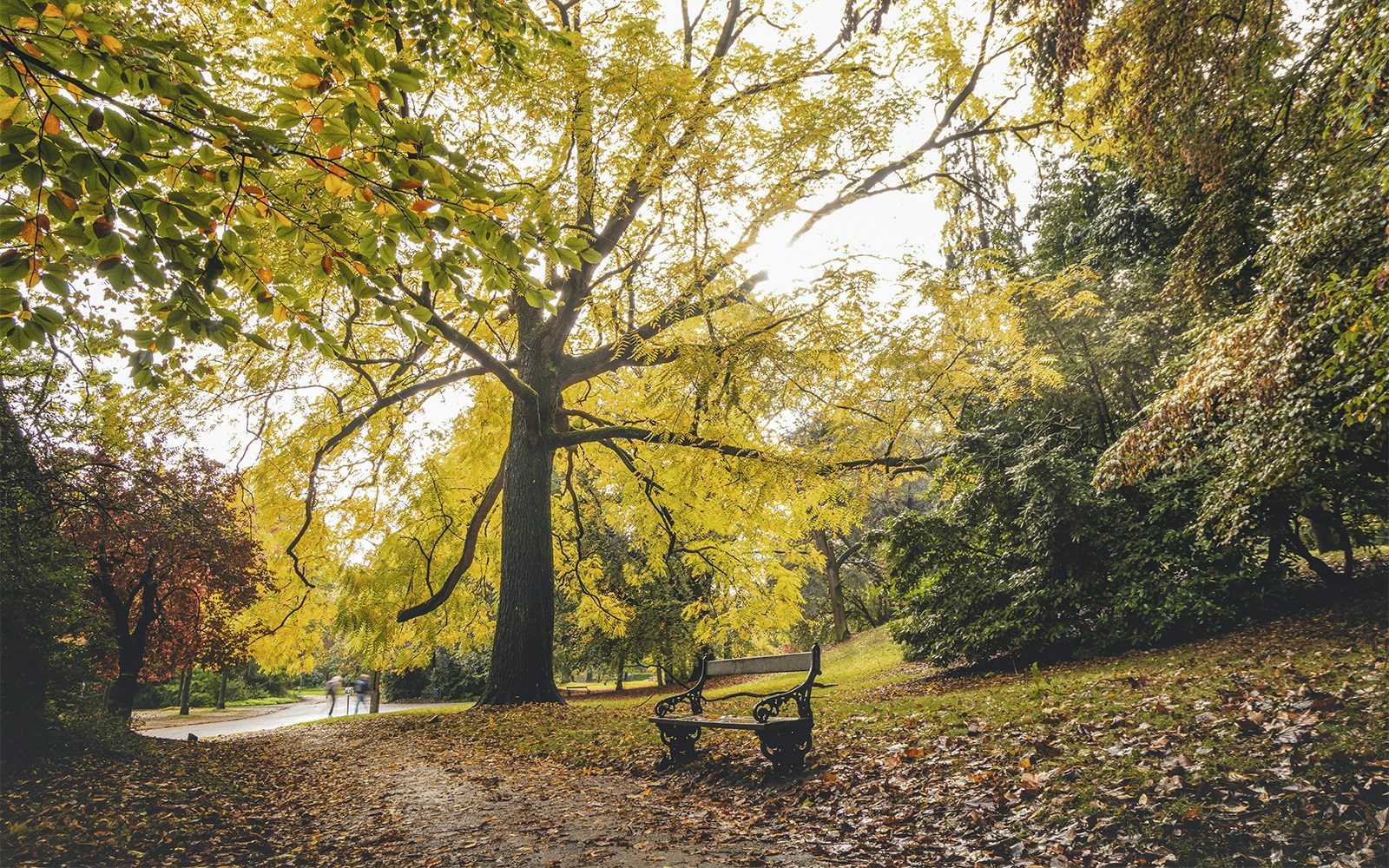
Autumn leaves in Citadel Park, Ghent, Belgium, with a bench under a large tree.
1/10

Visit Gravensteen Castle

Walk through this old medieval fortress right in the heart of the city and imagine life in Ghent centuries ago. You can explore its stone rooms, climb the stairways, and stand on the walls looking out at rooftops and church spires in every direction.

Climb the Belfry of Ghent

Head up the steps of Ghent’s famous bell tower and let the sound of the bells guide you as you go. Once you reach the top, you’ll be rewarded with wide views over the canals and old streets that make Ghent feel like a storybook town.

See the Ghent Altarpiece

Step inside St. Bavo’s Cathedral and take your time with the Ghent Altarpiece, one of the most important works of art in Europe. While you’re inside, look around at the stained glass windows and carved stone details that fill the rest of the cathedral.

Take a canal boat tour

Getting on a canal boat is one of the best ways to see Ghent from a different angle. As the boat moves slowly along the water, you’ll float past old bridges, lively cafés, and buildings that lean right over the river.

Walk the Graslei and Korenlei waterfronts

Stroll along these two riverside quays and let the scene unfold around you as boats drift by and people sit at outdoor tables. It’s an easy place to stop for a coffee, watch the world go by, and take pictures of the historic houses lining the water.

Explore the Patershol neighbourhood

Lose yourself in the narrow, winding streets of Patershol, one of Ghent’s oldest areas. There are small cafés tucked around corners, interesting shops to peek into, and a very different vibe from the busier main streets.

Join a chocolate-making workshop

If you love chocolate, this is a must. You’ll learn how Belgian chocolatiers work their magic, make a few pieces yourself, and get to enjoy your creations afterward.

Kayak the canals

For something a bit more active, rent a kayak and paddle through Ghent’s canals at your own pace. It’s surprisingly peaceful on the water, and you’ll get up close to bridges and buildings in a way you don’t from shore.

Browse Vrijdagmarkt market

Spend time in Vrijdagmarkt square, where locals gather to shop and eat. On market days, the square fills with stalls selling food, flowers, and crafts, and it’s a great place to feel the rhythm of everyday life in Ghent.

Relax in Citadel Park

When you want a break from walking the streets, head to Citadel Park or the botanical gardens. Sit on a bench, watch birds on the pond, and enjoy some quiet green space before diving back into the city’s buzz.

Suggested itinerary for Brussels to Ghent

Morning

Leave Brussels around 8:30 am and take the bus to Ghent, which usually takes about an hour. Start your visit at Gravensteen Castle and explore the medieval fortress. Afterward, walk over to St. Bavo’s Cathedral to see the Ghent Altarpiece.

Midday

For lunch, head to the Patershol neighbourhood, where you’ll find plenty of cafés and restaurants. Try a local dish or grab a quick bite while wandering the cobblestone streets. Later, take a walk along the beautiful Graslei and Korenlei waterfronts.

Afternoon

Spend the afternoon exploring at your own pace. You could take a canal boat tour to see the city from the water or rent a bike to discover quieter areas. If you prefer something more local, take a walk through Werregarenstraatje, Ghent’s graffiti alley.

Optional add-ons

If you have extra time or want to slow down, relax in Citadel Park or the botanical gardens, or join a chocolate-making workshop to create your own Belgian chocolates. Then head back to Brussels whenever you’re ready.

Handy tips

  • Best time: Catch a bus from Brussels before 9 am to get good seats and enjoy Ghent before it gets busy. Return after 5 pm to avoid the afternoon rush on the buses.
  • Booking hack: Reserve your round-trip bus tickets online in advance to skip last-minute lines and secure your seat.
  • Seasonal note: Summer weekends bring more tourists, so buses and popular sites like Gravensteen can be crowded. Consider visiting on weekdays if possible.
  • Local insight: If you enjoy quieter streets, explore Patershol and the canals early in the day before cafés and shops get busy.
  • Planning tip: Wear comfortable shoes for walking the cobbled streets, and leave some buffer time for spontaneous stops along the canals or waterfronts.

Frequently asked questions on how to get from Brussels to Ghent

The cheapest way is usually the bus from Brussels, especially if you book online in advance. It is cost-effective and reliable, with multiple departures daily.

More reads

About

Timings

Plan your visit